




Why choose pre-owned Hermes
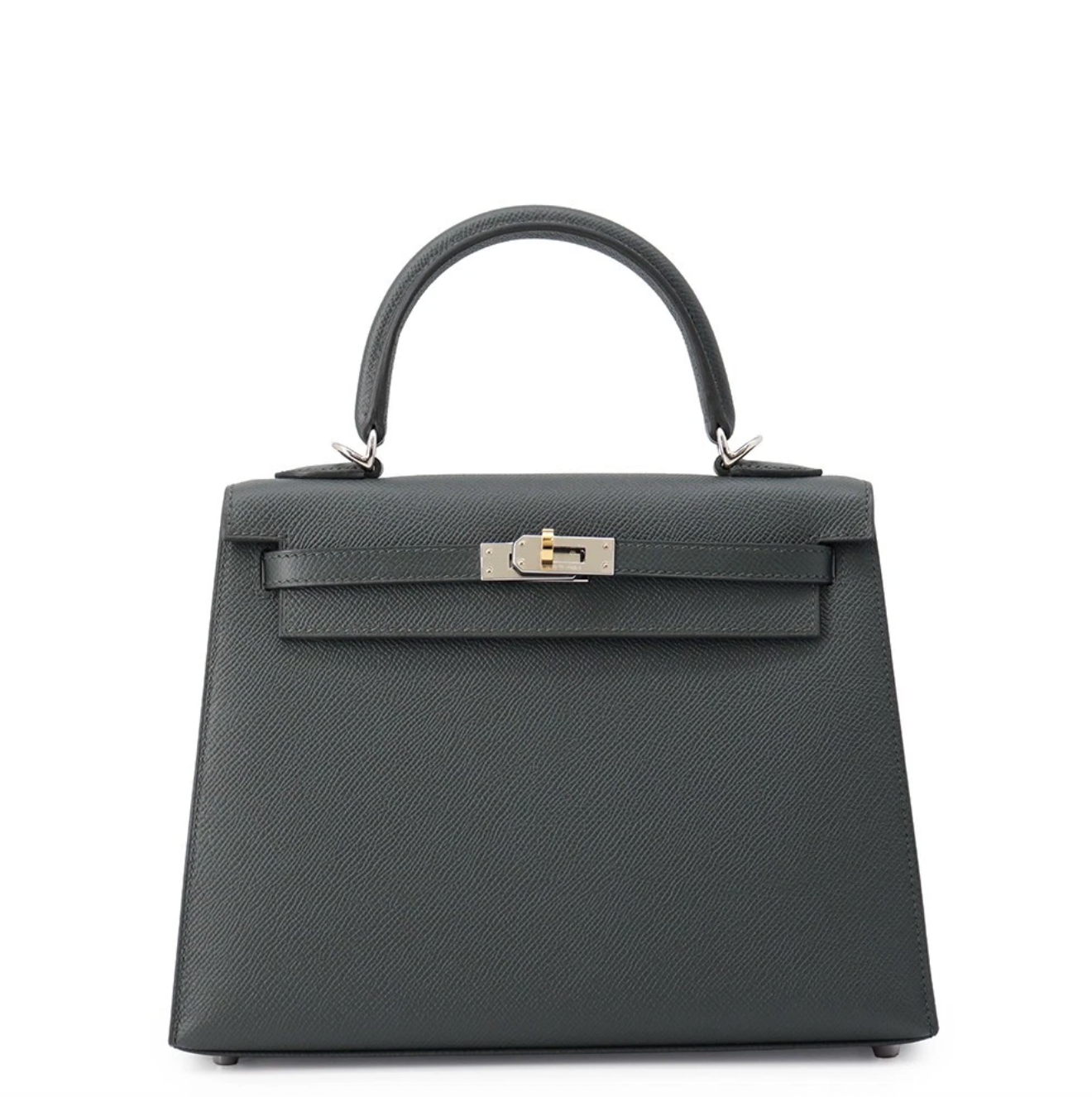
The Hermes boutique experience is deliberately limited. Allocation policies mean that even willing buyers cannot always access the piece they want at retail. The pre-owned market is where availability actually lives, and where you can be specific: a Kelly 28 in Etain with gold hardware in Very Good condition, not whatever happens to be available new.
Since 2021 we have handled hundreds of Hermes pieces across Birkin, Kelly, Constance, Lindy, Evelyne, Picotin, and more. We have seen what holds up, what does not, and what buyers consistently regret. This guide reflects that experience, not a content checklist.
Colors like Bleu Indigo, Gris Tourterelle, and Etain have not been widely available at retail for years. Pre-owned is the only route to specific combinations. We update our edit weekly and can source to spec on request.
Every piece we list is photographed in corners, handles, interior base, hardware, and glazing before it goes live. Wear is noted plainly. We have turned down pieces that did not meet our listing standard rather than photograph around the problem areas.
A well-maintained Hermes bag can have three or four owners across decades. That is not a compromise, it is the point. The leather gets better with careful use. Our packaging is designed to protect the piece for its next chapter, not just the delivery.
We will not tell you every Birkin is an investment. Some are. Many depend heavily on size, leather, color, and timing. What we can tell you is the condition, the market context, and whether the price we are asking is fair. That is the conversation we have with every buyer.
We post every new piece on Instagram before or alongside it going live on site. If you follow @thebopf you will also see condition walkthroughs, packaging reels, and the occasional piece that sells before it is formally listed. Tap either card below to view the full post on Instagram.


Buyer checklist for pre-owned Hermes
Buy the condition, not the model. A Birkin 30 in Good condition is a worse buy than a Picotin 18 in Excellent condition if your goal is to enjoy carrying it every day. Condition affects your daily experience and your resale options equally. Everything else is secondary.
These are the highest-contact points on any Hermes bag. On Togo and Clemence (soft, pebbled leathers), corners round and compress over time. On Epsom (structured, cross-hatched), corners can crack if the leather dries out. Ask specifically for corner close-ups before committing.
The orange or matching-color edge coating along straps, flaps, and gussets is one of the first things to wear. Some cracking and lifting is expected on older pieces. Uniform, intact glazing is a sign the bag has been stored and used carefully. Peeling or missing sections is harder to restore cleanly.
A Birkin 25 is genuinely small: phone, card holder, keys, and a lip balm. A Birkin 35 is genuinely large and visually dominant on most frames. The 30 is the most carried size for a reason. Before buying, load a bag of similar dimensions for a full day and see how it feels on your shoulder or in your hand.
Togo is forgiving: light scratches buff out, it absorbs minor moisture, and it holds structure well. Epsom is stiffer and more scratch-resistant on the surface but can show scuffs on corners prominently. Box calf (shiny, smooth) shows every fingerprint and scratch but develops a beautiful patina. Match the leather to how and where you actually carry bags, not to an Instagram image.
Craftsmanship and what to inspect
Hermes bags are saddle-stitched by hand, meaning two needles and a single linen thread pass through each hole in opposing directions. This is slower than machine stitching but structurally superior: if one stitch breaks, the others hold. On a pre-owned piece, stitching should be even, tight, and consistent in length. Loose or fraying stitches, especially near handles or the base, are a condition flag worth noting.
The palladium or gold hardware on a Hermes bag is plated, not solid metal. On a well-kept piece the plating should be even with no lifting, and engravings (like the turn-lock on a Kelly or Constance) should be crisp and centered. Hardware that has been over-polished, or sits unevenly in its housing, is worth questioning.
Structure comes first. A Birkin or Kelly should sit squarely with no leaning or base sag. Then corners and handles (highest contact), glazing along all edges, hardware function and plating, interior leather or toile condition, and finally the overall coherence of the piece. If any of these feel misaligned with what the seller has described, the piece does not go live.

Value retention (a realistic view)
The Birkin and Kelly have genuinely strong resale histories among luxury goods, particularly in classic colors (Noir, Gold, Etain, Etoupe) and wearable sizes (25, 28, 30, 35). But "Hermes holds value" is a generalization that breaks down quickly when you add specifics. A Birkin 40 in a niche color in Good condition is a very different proposition from a Kelly 28 in Etain with palladium hardware in Excellent condition.
Iconic silhouettes (Birkin, Kelly) in wearable sizes. Classic, broadly appealing colors like Noir, Gold, Etoupe, and Etain. Excellent or better condition. Complete accessories where present (clochette, lock, keys, dustbag). Popular hardware combinations, particularly PHW (palladium) and GHW (gold) on neutral colors.
Heavy wear, especially on corners, handles, or interior. Sizes at the extremes (Birkin 40, very mini formats) have narrower buyer pools. Niche or polarizing colors narrow your audience. Missing accessories can affect perceived completeness. A bag in Good condition will always compete on price, not on desirability.
We do not sell Hermes bags as investments. We sell them as exceptional objects that many people also happen to be able to resell well, depending on the piece. If your primary goal is resale return, buy the best condition you can afford in the most liquid combination (Birkin 30 or Kelly 28, Noir or Etoupe, Togo or Epsom, palladium hardware). If your primary goal is to carry and love it, that changes the decision entirely, and we think that is the better goal.
What Hermes model should you buy?
Start with lifestyle. Then choose a silhouette that matches how you carry and what you need it to fit. Here is the practical shortlist we use with clients.
| Your goal | Recommended models | Why it works |
|---|---|---|
| First Hermes or everyday | Picotin, Evelyne, Lindy | Wearable silhouettes that are easy to use day-to-day. |
| Structured elegance | Kelly, Constance | Polished shapes that work for events, work, and elevated styling. |
| Collector classic | Birkin, Kelly, Constance | Highly recognized icons with broad collector interest. |
| Hands-free | Evelyne, Constance | Crossbody-friendly for travel and daily movement. |
| Statement or rare | Limited editions, exotics, special hardware | More niche. Can be spectacular, but more sensitive to condition and buyer appetite. |
What drives resale prices?
Two Birkin 30s in Togo can be listed at very different prices and both be correctly priced. This is the part most buyers find confusing until someone explains the variables. Here is what we actually look at.
An Excellent condition Birkin 30 can command 20-40% more than the same bag in Good condition, depending on the color and leather. Corners, handles, and interior base are the make-or-break zones. Clean glazing throughout is a strong indicator of how carefully the bag has been kept.
Noir (black) and Gold (tan) are the most liquid Hermes colors because they match everything and attract the broadest buyer pool. Etoupe (warm grey) and Etain (cool grey) have strong followings. Niche colors like Rose Sakura or Bleu Agate are beautiful but narrow your resale audience significantly. If you are buying purely for resale, neutral is safer. If you are buying to carry, buy the color you love.
Palladium hardware (silver-tone) and gold hardware are both broadly desirable. The combination matters too: PHW on Etain or Noir is a classic pairing that most buyers find easy to wear. Gold hardware on Gold leather (the "all-gold" combination) is polarizing and commands a premium among those who love it. Brushed palladium (so-called "brushed PHW") is rarer and priced accordingly.
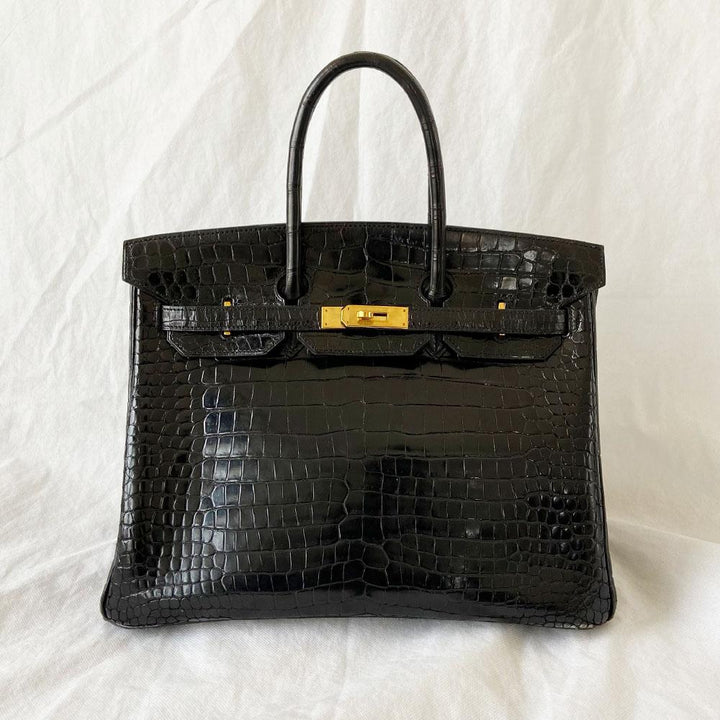
Togo and Clemence are the most common and broadly appealing leathers because they are durable and forgiving. Epsom holds structure beautifully but can show corner cracking on older pieces. Box calf (the original Hermes leather) develops an extraordinary patina but requires more maintenance. Exotic leathers (niloticus crocodile, lizard, ostrich) command significant premiums when in excellent condition, but the buyer pool is much narrower.
A "full set" means the bag arrived with its clochette (the small leather holder), padlock, two keys, dustbag, and original box where applicable. Full sets are rarer in pre-owned and command a premium, particularly on Birkin and Kelly. Missing a lock or keys is common and priced accordingly. Missing the dustbag matters less functionally but does affect how some buyers perceive completeness.
Each Hermes bag has a blind stamp indicating the year of production, represented by a letter inside a shape. Certain years or production periods are more sought after by collectors (particularly pre-2000 vintage pieces in good condition). For most buyers this is a minor factor, but for collectors of specific eras it can shift pricing meaningfully. We note the stamp on every listing.
How we authenticate Hermes
We use Entrupy as part of our authentication process. Entrupy is an AI-powered microscopic analysis tool used by resellers, authenticators, and customs agencies worldwide. It works by capturing microscopic images of the leather surface and cross-referencing them against a database of verified genuine pieces. The output is a certificate with a confidence score. For Hermes specifically, it catches surface-level leather inconsistencies that are invisible to the naked eye, including the polymer coatings and surface textures used in high-quality counterfeits.
Entrupy is one part of our process, not the whole of it. A piece can pass a microscopic leather check and still have incorrect hardware engravings, wrong stitching rhythm, or inconsistent interior finishing. Our physical review runs alongside the technology, not after it.
The Hermes counterfeit market has become sophisticated enough that visual-only checks, even by experienced eyes, can be fooled by the best fakes. The combination of physical review and Entrupy technology closes most of the gaps. We decline pieces that do not pass both. If we are not fully confident, the piece does not go into the edit regardless of the seller's provenance claims.
We gather the full picture before any review begins: seller provenance, purchase history, any prior authentication records, and a complete set of photographs covering all key areas. We note any inconsistencies at this stage before the physical piece is in hand.
We run an Entrupy analysis on the leather. This examines the microscopic surface texture of the hide and compares it to a database of confirmed genuine Hermes leather. The report generates a certificate and confidence score. Pieces that do not pass this stage are declined.
Saddle stitching should be even, tight, and consistent in hole spacing. The glazing (edge paint) should be applied smoothly with no bubbling or uneven edges. Interior leather or toile should be cleanly finished. The overall silhouette and structure should match the expected form of that model and size.
Turn-lock engravings on the Constance and Kelly should be centered and crisp. Palladium plating should be even with no lifting at edges. Zipper pulls on Lindy and other styles should move smoothly with appropriate resistance. Lock and key sets are examined for stamp consistency.
The blind stamp inside the bag indicates the year of manufacture using a letter code inside a shape (circle, square, or no enclosure for different eras). The stamp should be cleanly impressed, legible, and consistent in position for that model. We record the stamp on every listing.
Authentication and condition grading happen simultaneously. A piece that is genuine but misrepresented in condition does not go live accurately. We photograph every area of meaningful wear and describe it plainly. The goal is that what arrives matches what was listed, with no surprises.
Condition grading explained
Condition grades without examples are almost useless. "Light wear" on Togo leather looks different from "light wear" on Box calf or Epsom. Here is how we use each grade in practice, with specific reference points so you can compare listings accurately.
| Grade | What it means at BOPF | Leather-specific signs to expect |
|---|---|---|
| New / Unworn | Unused or carried once. No handling marks. Hardware shows no contact wear. May or may not include original box and dustbag, which we note separately. | Togo/Clemence: Fully plump pebble grain, no corner compression. Epsom: Cross-hatch pattern crisp, no flex marks at gusset base. Box calf: Mirror shine intact, zero scratches. |
| Excellent | Lightly used with genuine care. Structure fully intact. Corners and handles show minimal contact. This is the grade we most commonly list. Buyers at this grade are typically getting a bag that looks and performs as close to new as pre-owned realistically gets. | Togo/Clemence: Possibly the faintest corner rounding, imperceptible from a metre away. Epsom: No cracking at corners; possibly minor scuff only visible under light. Box calf: Light surface scratches that buff out; no deep marks. |
| Very Good | Noticeably carried but well-maintained. Structure and shape are still strong. Glazing may show some wear in specific areas. Interior is clean. This grade is common among pieces used regularly by careful owners and represents good everyday value. | Togo/Clemence: Visible corner softening and some handle compression; leather may be paler at wear points. Epsom: Corners show wear clearly; glazing may be thinning at edges. Box calf: Surface scratches are visible and some have not buffed out; patina developing. |
| Good / Loved | Heavier wear throughout. Still structurally sound but the use is evident. Best for buyers who want to enter the Hermes market at a lower price point, or who genuinely prefer a bag with character. We describe the specific wear plainly and photograph it. | Togo/Clemence: Significant corner wear, possible color loss at handles; base may show surface marks. Epsom: Corner cracking is likely; glazing peeling in sections. Box calf: Patina is deep and uneven; scratches are numerous but can be a feature at this grade. |
Hermes offers a "spa" service for bags purchased through boutiques, which can restore glazing and address surface wear. Some pre-owned pieces have been through this. When we know a piece has been spa-serviced we note it, as it affects the condition context. A spa-serviced piece can look Excellent but have underlying age on the leather that a genuinely unworn piece would not. We treat these as a separate category and describe them as such.
Care and storage for Hermes bags
The most expensive thing you can do with a Hermes bag is store it badly. Leather needs air circulation, stable temperature, and support. Here is what actually matters, by situation.
Store upright, never on its side or base alone. Use a soft filler (tissue paper or a purpose-made pillow insert) to maintain shape, but do not overstuff. Overfilling stresses the seams and can permanently distort the base. Keep in the dustbag with the top loosely folded, not knotted closed, so air can circulate.
Consistent is better than perfect. Avoid storing near exterior walls in humid climates, in car boots, or near air conditioning vents that cycle on and off. In Dubai specifically, the move between air-conditioned interiors and outdoor heat can affect leather over time. If you are not carrying a bag for a month or more, a silica gel packet in the dustbag absorbs excess moisture without touching the leather.
Togo and Clemence: Largely self-maintaining. Buff minor surface scuffs gently with a clean finger. Avoid leather conditioners unless the surface shows genuine dryness. Epsom: Do not apply oil-based conditioners as they can darken the cross-hatch. Gentle dry microfiber only. Box calf: Responds well to a specialist wax (like Saphir Renovateur, applied sparingly) to maintain shine and prevent drying. This is the only Hermes leather we recommend proactive conditioning for.
Blot immediately with a clean, lint-free cloth and apply gentle, even pressure. Do not rub: rubbing pushes moisture into the leather rather than absorbing it. Leave to dry naturally at room temperature, stuffed lightly to hold shape. Do not use a hairdryer, direct sunlight, or place near a radiator. On Togo and Clemence, watermarks usually disappear as the leather dries evenly. On Box calf, they may leave a tide mark: message us before attempting any treatment as the approach varies.
Concierge sourcing
A significant portion of our Hermes sales happen before a piece ever goes live on site. If you have a specific combination in mind, model, size, leather, color, hardware, and a realistic budget, send it to us on WhatsApp. We will tell you honestly whether what you are describing exists at that price in the current market, and notify you when we find it. We have sourced everything from a Birkin 25 in Blue Brume with palladium hardware to a vintage Kelly 32 in Box calf for clients who knew exactly what they wanted. Sometimes the wait is a week. Sometimes it is three months. We will always give you an honest timeline.
Further reading
Dig deeper into specific topics with our buying guides and collector resources.
Hermes Birkin vs Kelly: Which Should You Buy?
A practical side-by-side on size, structure, price range, and wearability to help you choose your first icon.
Read more →Hermes Leather Types Explained: Togo, Epsom, Clemence and More
What the different leathers look, feel, and age like, and which suits your lifestyle best.
Read more →How to Authenticate a Pre-owned Hermes Bag
What to check before you buy: stitching, hardware, stamps, glazing, and the questions every buyer should ask.
Read more →Explore the Hermes edit
Browse faster with high-intent categories and popular filters.


